Showing posts with label Market. Show all posts

Friday, 14 June 2013

Wagons evolving to attract customers


Based on article from Korea Times June 9th, 2013

For many, station wagons do not sound attractive, as they were traditionally far from being stylish; probably due to their emphasis on practicality.

Sedans have long dominated the local market but the demand for more various types of vehicles have led automakers to launch various station wagons here, which have better looks and upgraded features to satisfy sophisticated drivers.

Station wagons are often marketed with different nameplates such as “touring” by BMW, “shooting break” by Mercedes-Benz and “break” by Citroen, as many automakers want to give their estate models a different and new image from the conventional boxy and ugly.

The followings are station wagon models equipped with diesel engines that are available here.

BMW 3 Series Touring


BMW


BMW Korea is the most active brand in introducing wagon models here.

Last year, it introduced the new 3 Series touring models to attract drivers who seek efficiency and practicality as well as premium features.

Two variants of the new 3 Series Touring are now available ― the 320d and the 320d M Sports Package, priced at 50.7 million won and 58.5 million won, respectively.

BMW Korea plans to soon add the 5 Series Touring models, which were first introduced here at the Busan Motor Show last year. Its price tag is 76.7 million won.

The idea behind a station wagon is to offer the comfort of a sedan with enough space for long journeys. But the German automaker also guarantees pure driving pleasure with its models.

The BMW 3 Series Touring combines versatility and innovative technology for a superbly sporty performance. Its turbo diesel engine offers high dynamics and efficiency with a fuel economy of 17.5 kilometers per liter. The boot also has plenty of room ― from 450 liters to 1,500 liters when the rear seat is folded down.

The BMW 525d xDrive Touring also features a strong yet elegant 2.0 diesel engine that can produce 218 horsepower, while its fuel efficiency stands at 16.0 km/l. It also has four-wheel drive, and a boot that can be expanded to 1,670 liters from 560, depending on the various rear seat arrangements.


Mercedes-Benz CLS Shooting Brake


Mercedes-Benz


Mercedes-Benz sells the most expensive model on the local market with its new CLS Shooting Brake priced at 89 million won.

Since it is a modified version based on the four-door coupe CLS, it is also one of the most stylish and elegant on the market.

Mercedes introduced the original CLS in 2004 to create a new market niche ― the four-door coupe, and it upped the ante by introducing the CLS Shooting Brake, essentially a long, low estate car designed to make its rivals look square.

In this sense, the luxury automaker does not want the model to be categorized as an estate but to be called a coupe with a “liftgate.”

It comes with four cylinder 2,143 diesel turbo engine, which can generate 204 horsepower.
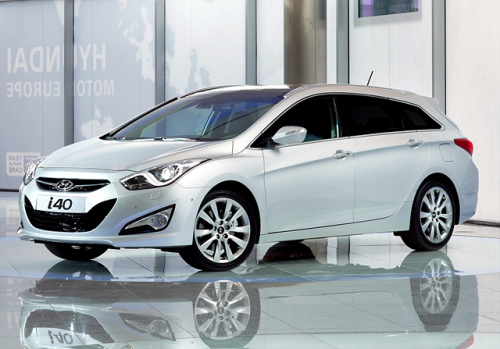


                                    Hyundai i40


Hyundai Motor

Hyundai Motor launched its first Avante Touring in 1995, based on the body of popular Avante sedan. The first ambitious trial to sell an estate car here turned out to be a failure due to its awkward design.

But the automaker has launched the all-new i40 wagon here after its success in Europe. The i40 is available in two forms ― saloon and estate.

Designed and engineered at the company's European R&D headquarters in Germany, the i40 has moved Hyundai towards a “modern premium” positioning on the continent, providing consumers with high-end features and vehicle quality at accessible prices.

It represents an evolution of Hyundai's unique “fluidic sculpture” form, creating a sleek, elegant wagon with uncompromised comfort and load capacity.

Its cargo capacity ranges from 553 liters to 1,719 liters with the rear seats folded down.

The all-new Hyundai i40 comes with either a 1.7-liter diesel or 2.0-liter gasoline engine.

The biggest advantage of the i40 wagon is affordability. Its prices range from 26 million won to 32 million won.
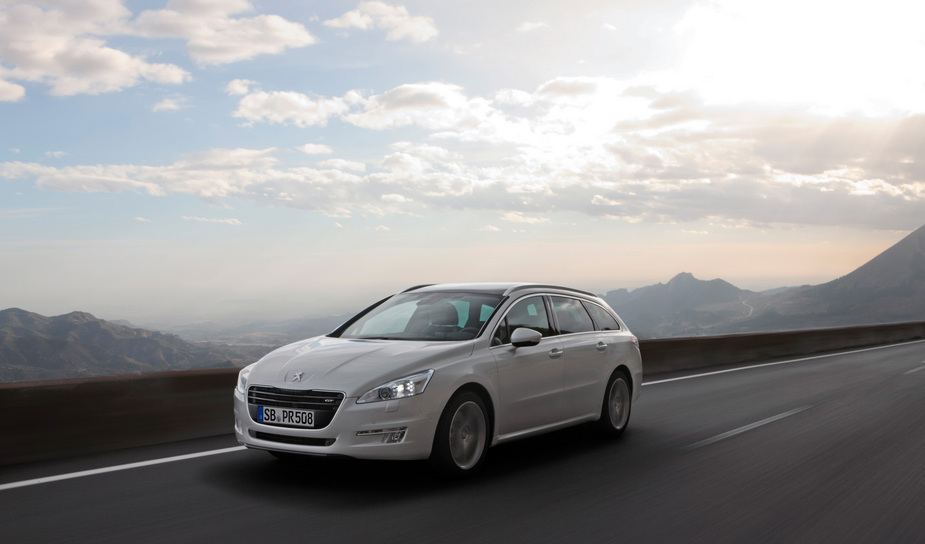


                                     Peugeot 508 SW Allure

Peugeot

Peugeot is best known for its high fuel efficiency here, and the French automaker’s estate models are no exception.

With the success of Peugeot 308 sedan, the firm has launched the five-door hatchback, the SW estate and the CC coupe convertible.

The Peugeot 308 SW e-Hdi’s fuel economy is very impressive at 18.1 km/l. The cargo capacity can be expanded to 2,149 liter from 674 liters depending on rear seat arrangements. It is priced at 33.9 million won.

The Peugeot 508 SW Allure is an impressive all-rounder. It may not be quite as sharp to drive as the saloon version, but comfort and luxury are top-notch and it certainly feels built to last.

Its 2.0-liter Hdi engine can generate 163 horsepower with a fuel efficiency of 14.8 km/l.

It is priced at 48.9 million won.

Thursday, 2 May 2013

Nissan's new Thai factory set to house test course


The Japanese car maker Nissan expects to launch its first test course outside Japan at its planned second production plant on Bang Na-Trat Road in Samut Prakan by mid-year.

"The Thailand Proving Ground will be the hub of Southeast Asia, which is the base of Nissan Technical Center," said Takayuki Kimura, the president of Nissan Motor (Thailand).

"It will help to reduce shipping costs significantly, as all new models have to be shipped to be tested in Japan."

At present, Nissan operates three test courses in Japan, at Tochigi, Kanagawa and Hokkaido.

Last year, Nissan announced an ambitious plan to build an 11-billion-baht factory adjacent to its existing one in Samut Prakan.

The factory covering 150 rai will include a production line, research and development centre and a test course in a move aimed at sustaining Nissan's growth across Southeast Asia.

The plant will have a production schedule of 75,000 vehicles a year when it starts operating in August 2014, doubling to 150,000 within a few years.

Nissan's existing plant now makes 220,000 passenger cars a year.

Once the second plant is running at full capacity, Nissan will have an annual production capacity of 370,000 vehicles excluding the 60,000 Navara pickup trucks now built at Mitsubishi's factory.

Nissan plans to move production of 60,000 Navara pickup trucks to the new plant.

Mr Kimura said Nissan plans to sell 500,000 vehicles in the Asean region in its fiscal 2016, with its market share rising to more than 15%.

For fiscal 2012, Nissan sold 260,000 vehicles in Asean for a market share of 7.2%.

It has production facilities in Indonesia, Malaysia, the Philippines and Vietnam.

In 2011, Nissan spent 25 billion yen (7.53 billion baht) to raise annual production capacity at its Indonesian plant.

"Thailand and Indonesia are the main production bases in Asean, serving both domestic and overseas markets," Mr Kimura said.

In the Thai market, Nissan expects sales of both passenger cars and pickup trucks to reach 120,000 in fiscal 2013, a dip from 132,000 in the year that just ended March 31.

Tuesday, 16 April 2013


GM outsells VW in China for 1st time in Q3

Based on article from Korea Herald April 2013

General Motors Co. outsold Volkswagen AG in China for the first time in three quarters, helped by growth in demand for Buick vehicles.

Volkswagen, which unlike GM includes Hong Kong and Macau in its China figures, today reported first-quarter sales in China climbed 21 percent to about 770,000 vehicles. That’s 5.7 percent fewer than the deliveries reported by GM last week.

The results give Detroit-based GM a head start as it seeks to keep its lead ― on an annual basis ― among foreign automakers in China for a ninth straight year. Both companies count China as their biggest market, which is forecast to top 20 million units for the first time this year.


GM’s Cadillac vehicles are on display at a dealership in Shanghai. (Bloomberg)

While Volkswagen’s growth for the quarter outpaced the overall Chinese passenger-vehicle market, the group’s 11 percent expansion in March was slower than the industry growth reported by the China Association of Automobile Manufacturers yesterday.

Volkswagen recalled almost 400,000 vehicles in China last month to replace defective gearboxes that could result in loss of power. While the automaker declined to disclose how much that would cost them, research firm LMC Automotive estimates replacements could cost between 3,000 yuan ($485) to 10,000 yuan per vehicle, which could total over $600 million.

Ford Motor Co. saw the fastest growth among major foreign automakers, seeing its deliveries surging 54 percent to more than 186,000 vehicles. That indicates Ford outsold Toyota Motor Corp. in China for the first time, based on quarterly company figures stretching back to 2011.

Toyota, Nissan Motor Co. and Honda Motor Co. all saw declines in the quarter as they struggled to fully recover from the anti-Japan protests that flared last September.

South Korea’s Hyundai Motor Co. last week reported China sales rose 41 percent to a record 260,716 units.

(Bloomberg)

Thursday, 11 April 2013


Thailand vehicle production up 43%


The Thai Federation of Industries expects vehicle production to jump 43 percent in the first quarter of 2013, and a government official recently stated that Thailand could build 2.8 million vehicles this year, up from 2.4 million last year.
“This would enable car and truck production in Thailand to leapfrog past assemblies in Canada,” Gomes wrote. He suggests the country could be making 3 million cars a year by 2015. Gomes’s assessment jibes with official data from the International Organization of Motor Vehicle Manufacturers, which shows Canada barely held on to its No. 10 overall ranking last year, with 2,463,732 Canadian-built vehicles. Thailand built 2,483,043 vehicles in 2012, good enough for ninth overall.

automotive_headline

China remains the world’s largest car manufacturer

Indeed, Canada has seen its share of the global market slowly erode in recent years. While China remains the world’s largest car manufacturer, building 19.2 million cars last year, America held on to second place with 10.3 million vehicles. Canada was the second-largest North American producer for decades, before Mexico eclipsed Canada following the recession. Mexico built just over three million cars last year, good enough for 8th in the world. Overall, carmakers built more than 84 million cars all over the world last year. 
In 2011, 1.46 million vehicles were manufactured in Thailand, ranking Thailand 14th among the world’s automotive manufacturing countries. According to the Thai Automotive Institute, production is predicted to reach 2.2 million units in 2012, 50% produced for domestic sale and 50% for export.

“Thailand is expected to produce 2 million cars in 2012 and is expected to achieve 3 million units by 2015 – placing it among the world’s top 10 auto producing countries. The economic opening of Myanmar could propel Thailand’s ascension into the world’s top 10 auto producing countries even faster by increasing regional demand as it looks to upgrade its older cars.”
 -Dr. Patima Jeerapaet, President of Thailand Automotive Institute-


Wednesday, 27 March 2013

Eco-car expansion considered

Small-car popularity sparks scheme rethink
The government may issue a second invitation for its eco-car project to help spur automobile production, say well-placed sources.

Models get comfortable next to a Mercedes-Benz at the media preview of the 34th Motor Show at Impact Muang Thong Thani Tuesday. The show is open to the public from now through April 7. TAWATCHAI KEMGUMNERD

The decision follows the growing popularity of small cars, helped in no small part by the recently concluded first-time car buyer scheme.


The populist policy may have stirred up controversy, but the tax rebates to customers helped to boost annual vehicle sales to 1.3 million units last year.

As well, the Thai government wants to promote the country as one of the world's leading automotive production hubs.

After hitting a new milestone of 2 million vehicles produced last year, the state wants to raise the target to 3 million by 2017.

Industry Ministry officials reportedly favour the change.

Leading car companies that have established large manufacturing facilities in Thailand but missed out on the eco-car boat have expressed approval for the anticipated second round of applications.

Executives from Ford and Mazda say they will likely participate in the new eco-car programme since such products are mostly B-segment small cars with unusually low prices due to benefits such as lower excise tax, duty-free importation of machinery and corporate income tax exemption.

"The Mazda2 cannot stay competitive in Thailand in the long run, as it's at a disadvantage with eco-car prices," stressed one Mazda source.

Other models facing a similar hardship are the Chevrolet Sonic and the Ford Fiesta.

Even if the proposed carbon dioxide-based excise tax system does take effect as planned in 2016, eco-cars will enjoy lower rates than their ineligible counterparts with other engine or fuel types.

Hybrid engines or those running on either E85 gasohol or compressed natural gas receive special rates even under the new scheme.

The source said the new eco-car applications will automatically lead to more investment in production capacity, more jobs and a higher-value-added parts supply chain.

Apart from allowing all major players to compete more fairly against each other, an extended eco-car invitation could lure newcomers Hyundai-Kia and Volkswagen.

At yesterday's media preview of the Bangkok International Motor Show, Mitsubishi showed its G4 concept car, a thinly disguised sedan version of the Mirage eco-car that is expected to appear in Thai showrooms at year-end.

The three eco-car brands made locally are from Honda, Nissan and Suzuki.

Wednesday, 20 March 2013


Two extremes of SUV appeal to consumers

Based on article from KoreaTimes March 2013

The Chevrolet Trax
The Korando Turismo


Turismo, Trax meet diversified demand

Sport utility vehicles (SUVs) are popular in Korea with various models available on the market. Ssangyong Motor and GM Korea have recently broadened the scope of this sector by introducing the largest and smallest SUVs, respectively.

Obviously, the companies didn’t simply enlarge or reduce their size but have added new features, which existing models may lack. In that sense, the two new models ― the Korando Turismo from Ssangyong and the Chevrolet Trax from GM ― are well worth a look. Both hit the market last month.

First, Ssanyong seems to have completed its lineup to revive its fame as a leading Korean SUV manufacturer by adding the Korando Turismo to its stable, which includes the Korando C, the Korando Sports and the Rexton W.

The Turismo is the biggest SUV at 5.13 meters long, 1.915 meters wide and 1.815 high, which allows it to accommodate 11 people including a driver.

The model was originally developed as the next generation of the Rodius, which is also a spacious multi-purpose vehicle (MPV) with huge proportions but has always been criticized for its awkward styling, which was nicknamed a “funeral car.”

In contrast to its predecessor, the Turismo has an upgraded, more stylish outlook.

In short, the new model can be described as a large version of a stylish SUV with the practical advantages of an MPV.

The front of the Korando Turismo features gigantic headlamps and an aggressive looking grill. The rear end is far from bland and has stylish tail lamps and integrated reflectors on the bumper.

On the inside, the new model has a better dashboard layout and a large multimedia screen, and of course, offers spacious proportions, which can be utilized for various purposes depending on the seat arrangement.

But the new look and big size isn’t all there is to the Turismo. It also promises reliable performances and a comfortable ride.

The Turismo comes with an e-XDI200 LET engine, which is also used in the automaker’s other SUVs. It is optimized for the traffic conditions and topography of Korea, and can boast 155 horsepower with a maximum torque of 36.7 kilogram-meters.

Thanks to the engine, drivers can be comfortable at the wheel without any disturbing noises or vibrations, and can also enjoy winding roads and mountainous highways as well as city roads thanks to the reinforced middle and low-speed torque.

It’s hard to find flaws in terms of driving this big SUV with only a 2,000-liter engine. It is equipped with an electronic four-wheel drive system which allows safer and comfortable driving even on off-roads.

The prices for the Korando Turismo range from 24.8 million won ($22,859) to 35.64 million won.


Trax

The Chevrolet Trax entered the market as the smallest SUV available here.

It is 4.24 meters long, 1.67 meters high and 1.775 meters wide. It does not look that small, however, thanks to its stylish appearance, and it can easily accommodate five adults.

Due to its small size, it is also the most affordable SUV with prices ranging from 19.4 million to 22.89 million won. It can be very attractive for those wanting to buy their first car or urban commuters who want some out-of-city adventure during holidays.

At first glance, it is immediately identifiable as a member of the Chevrolet family with big headlamps in balance with a prominent grille. Car owners who like other Chevrolet vehicles, such as the Spark and the Captiva, will not be disappointed by the look of the Trax.

The real issue would be its interior space.

In fact, it has a large amount of storage space. For those who travel with leisure equipment such as snowboards, the rear trunk is large enough for bags with the rear seats folded down into different seating positions.

In terms of performance, people may have different views on the Trax.

The model is also the first domestically produced vehicle equipped with a 1.4-liter turbocharged gasoline engine, which can generate 140 horsepower and a maximum torque of 20.4 kilogram-meters.

In urban environments, the Trax is a lovely city car, but on the open road, it suffers a little with its underpowered engine.

Some drivers might find the model disappointing if looking for quick response and power, but it surely performs excellently given its price range. Its performance and power are equivalent to those of compact sedans with 1.6 liter gasoline engines.

Another strength of the Trax is its upgraded Chevrolet MyLink infotainment system, which can aggregate content from smartphones onto a 7-inch touch-screen display.

MyLink also supports TuneIn Internet radio and BringGo _ a navigation application that can be downloaded onto compatible smartphones, making for an affordable and convenient smartphone-based navigation system.
 
It is also compatible with the EyesFree mode of Apple’s Siri automated intelligent assistant, allowing the driver to perform a number of tasks while keeping his or her eyes on the road and hands on the wheel.

Wednesday, 13 February 2013

End of government subsidies to hurt 2013 new car sales in Japan


End of government subsidies to hurt 2013 new car sales in Japan


New car sales in Japan will drop by 11.7 percent in 2013 from the previous year due largely to the expiration of government subsidies for eco-friendly cars, according to an industry report.
A production line of Toyota Motor Corp.'s eco-friendly car Aqua photographed on March 9, 2012, in Kanegasaki, Iwate Prefecture. Sales of the Aqua greatly contributed to domestic sales increase of gas-electric hybrid vehicles in 2012. (Asahi Shimbun file photo)

The report, released by the Japan Automobile Manufacturers Association on Jan. 31, predicts sales of 4.744 million new vehicles this year.
In 2012, domestic new vehicle sales rose by 27.5 percent to some 5.37 million units--the first time in four years that sales have reached 5 million units. The government subsidies for the purchase of eco-friendly cars, which were reintroduced at the end of 2011, were largely responsible for the sales increase.
But the subsidies expired in September, and the policy's effect will not contribute to this year's sales.
The sales in 2013, excluding minivehicles, will fall by 13.2 percent to 2.944 million units, the first drop in two years, according to the report.
Minivehicle sales, which rose by about 30 percent last year due to consumers’ preference for compact cars and the successive introduction of new models, are also expected to decline for the first time in two years, by 9.3 percent to 1.796 million units.
The government plans to raise the consumption tax to 8 percent in April 2014. The report’s prediction is based on an assumption that there will be no last-minute demand for new vehicle purchases in 2013 because the automobile acquisition tax is expected to be reduced at the same time.
But the government has not indicated when the rate of the tax reduction will be decided, and both the rate and the timing of the decision can alter sales in 2013.
The ruling parties' tax reform outline for fiscal 2013 states the government will reduce the automobile acquisition tax in April 2014 and then abolish it in October 2015 when the consumption tax rate rises to 10 percent. But alternative revenue sources, along with the reduction rate, have not been decided.

Wednesday, 6 February 2013


Korean Carmakers Struggle to Defend Home Turf

Based on article from The Korea Times Jan. 22, 2013


Nearly one out of ten passenger cars registered in Seoul last year were made by foreign automakers, data showed, indicating the rising popularity of foreign cars.

The market share of imported brands has been rapidly increasing in the past few years and surpassed 10 percent for the first time last year. They sold 130,858 vehicles, up 24.6 percent from the previous year.

Industry insiders forecast imported cars will continue to expand their presence here by aggressively marketing their products after lowering prices and adding more affordable models to their lineups.

Marketing Insight, a local automotive-specialized research firm, forecast their market share will jump to 18 percent in 2015.

Currently, German firms BMW, Mercedes-Benz, Audi and Volkswagen dominate the imported car market, with a combined market share of 63.83 percent, while 19 others share the rest.

But market insiders believe minor players, especially Japanese firms whose products have been viewed less-favorably than European ones here, will be more aggressive in marketing to catch up with the frontrunners.

Such forecasts seem sure to threat the local automakers and now the question is how local players Hyundai Motor, Kia Motors, Renault Samsung Motors, GM Korea and Ssangyong Motor can cope with the competition from their foreign counterparts.

The number of consumers who would buy an imported vehicle for their next car purchase has continuously increased in the past 10 years, according to data from Marketing Insight.

A recent survey by the firm of about 30,000 drivers with the intention to buy a new car within two years showed the rate of people wanting a foreign car increased by 10 percentage points to 16.5 percent.

The number of consumers who wanted to buy Hyundai or Kia models has shown no decrease with the combined rate of purchase intention from both companies standing at 67 percent in 2012.

But the number of drivers planning to buy a Renault Samsung, GM Korea or Ssangyong has decreased to 16.8 percent from 31.5 percent in 2003.

“It’s obvious that more imported cars will be sold here and it will directly affect local automakers’ sales,” said Marketing Insight managing director Lee Kun-hyo. “Imported brands will eat into the market share of the three weak players first and then the two giants.”

He said the market share of luxury cars from domestic brands has already shrunk due to pressure from competitors from abroad.

“Local automaker’s compact car segments will be also affected, as foreign brands have already launched various small and compact cars, which used to be dominated by local firms,” he said.

Imported cars now have over 30 percent market share for premium cars with an engine capacity of 3,000 cc or bigger. But they also want a bigger stake in the local market by introducing more small and compact vehicles.

But the explosive growth of foreign brands has led to some complaints.


“Now, the carmakers need to address the inconvenience of foreign car owners from the lack of repair centers to high maintenance costs and not only focus on selling more cars,” said Kim Pil-soo, a professor of automotive studies at Daelim College. “Otherwise, they simply won’t grow here.”

Thursday, 6 December 2012

Toyota's real rival for the Honda CR-V

Toyota's real rival for the Honda CR-V


Fourth-gen RAV4 gets more polished on-road dynamics, bigger body and more efficient powertrain

There seems to be a family look forming at Toyota... 

Yes, and you can see such a face in many other Toyotas now on sale, particularly those in Europe like the Yaris and Auris. 

 And the latest model to get it is the RAV4, unveiled in fourth-generation form at this year's LA motor show. We hear the next-generation Corolla and Vios will get the same treatment when launched in Thailand next year.

Such a cosmetic trait helps give Toyota's new compact SUV a fresh appearance to rival the likes of the Honda CR-V, which was just launched in Thailand in fourth-gen form this year.

But it's not coming to Thailand anyways... 

Probably not, and only in the Thai grey market if you want one. Although the first-gen RAV4 was officially imported to Thailand in the mid-1990s, the succeeding generations weren't.

Why? Because Toyota wants to offer the Fortuner mid-size SUV (preceded by the Sport Rider that came into life before 2000) instead because it can be priced in the same territory as the RAV4 (if assembled in Thailand) between 1 and 1.5 million baht.

That's why Chevrolet, Ford and Mitsubishi try to focus more on pickup-based SUVs rather than car-based variations in Thailand due to the special 20% excise tax given to the Trailblazer, Everest and Pajero Sport.

But car-based SUVs are better to drive...

Yes, if you're talking about on-road driving. That's also why some people simply opt for the CR-V, or the soon-to-be-phased-out Chevrolet Captiva and Ford Escape.

Which is really a pity because there's so much to like about car-based SUVs. Take the latest RAV4, as an example. It now comes with the Camry's 2.5-litre four-cylinder engine and six-speed automatic for refined and economical driving. There's also a new clever 4WD system to optimally split torque between the front and rear axles under varying road conditions.

The other improvement in the RAV4 is the bigger cabin, thanks to a 100mm increase in wheelbase length to 2,660mm, which also sees a flat floor when the rear seats fold down

Seems like Honda Thailand can chill out...

Yeah, it would have been nice if a player as big as Toyota could offer more products in the Thai line-up. The decision by Honda to refrain from equipping the CR-V with the latest fuel-saving tech in Thailand could possibly be because Toyota Motor Thailand is still ignoring official sales of the RAV4 (our Malaysian friends have always been getting it).

So much for competition, you could say.

Wednesday, 24 October 2012

iAd: Breast Cancer Self-Check iPad Ad

iAd: Breast Cancer Self-Check iPad Ad

http://www.digitalbuzzblog.com/iad-breast-cancer-self-check-ipad-ad/


Here’s a really simple, smart, actionable iPad Ad created in conjunction with Breast Cancer Awareness Month and the National Cancer Society of Malaysia.  Each step of the interactive challenge is one part of the official breast cancer self-check process, so when readers complete the challenges, they are alerted to the fact they’ve just learned how to check their own breasts for cancer