Showing posts with label South Korea. Show all posts

Tuesday, 11 March 2014

Ad of the Day: Cute, Quirky Chevy Commercial on the Oscars Was Made for $4,000 We talk to the director By David Gianatasio


Winner of Chevy and Mofilm's international Oscars competition
Imagination and ingenuity can drive you almost anywhere—even to the Academy Awards telecast.
So learned Jude Chun, a South Korean independent filmmaker whose delightful minute-long winning entry in Chevrolet and Mofilm's international Oscars competition aired during Sunday night's gala on ABC.
The film-within-a-film, created with co-directors Eunhae Cho and Sunyoung Hwang, shows some imaginative kids making a movie of their own, called "Speed Chaser." Chevy's 2014 Cruze is prominently featured, in both life-size and toy-model versions.
"We started from the fact that our target audience was watching the Oscars telecast, and we wanted to make something that celebrated the magic of movies," Chun tells Adweek.
The clip, chosen from among 72 entries, is part of the automaker's "Find New Roads" campaign, a mantra Chun says also captures the essence of filmmaking. "A budget of 100 millions of dollars might help, but it's really imagination, creativity and passion that get movies made," he says.
The film's authenticity and heart stem from Chun's youthful DIY experiments in moviemaking. "When I was in high school, I used to make videos with my friends," he says. "Just silly stuff like Matrix parodies. We used office chairs as dollies, lamp stands as lighting. I used to hook up two VHS players to a TV, and press play/record/rewind to edit my movies."
Chun's winning Chevy effort was also a low-budget affair. "'Speed Chaser' was shot in a field near Hwaseong City, Korea," he says. "We had one day of principal photography, and a half day for pickups. Our total budget was about $4,000." Still, the performers got as intense as the cast of a Hollywood blockbuster. "Our little actress [Jungwon Lee] was so method that once she started crying, she couldn't stop. Luckily, she nailed it in one take!" says Chun.
As branded content, the film succeeds thanks to its whimsical, soft-sell approach. The Cruze gets a lot of screen time, but that works in the context of the story and never feels intrusive. Best of all, the concept isn't forced, because imagination and creative thinking really can accelerate meaningful endeavors in art and commerce, from designing automobiles to making movies and commercials.
Plus, the kids' low-tech soundtrack choice is awesome. More car commercials should give kazoos a try.

Wednesday, 8 January 2014


Hyundai Motor Offers Online Factory Tour
 

Based on article from Korea Times Jan 5, 2014


Hyundai Motor on Sunday opened a new website, called “H Tour,” that allows visitors to travel to all 10 global production plants that the carmaker operates in eight countries.

The website at http://tour.hyundai.com offers diverse features such as introduction video clips of each plant and other historical and production details of the facilities and the carmaker overall.

With the latest completion of the Brazil plant in 2012, Hyundai has a global production network connecting Korea, China, India, the U.S., Brazil, Russia, the Czech Republic and Turkey.

The carmaker, touting the online tour program as the first of its kind in the global automotive industry, said it would step up efforts to better communicate with customers online.

The tour is offered in Korean and English, while users also can submit field-trip requests to each plant via the website.           

Tuesday, 3 December 2013


Hyundai Motor supports artists


Visitors take a look at artwork in the Gallery Art Zone
at the National Museum of Modern and Contemporary Art in Seoul.
/ Courtesy of Hyundai Motor

Based on article from Korea Times Nov 7, 2013
Hyundai Motor said Thursday that it will donate a total of 12 billion won to the National Museum of Modern and Contemporary Art over 10 years beginning next year as part of its Mecenat project. It is Hyundai’s biggest donation yet to a single art organization.  
                
“This is our commitment to the promotion of the nation’s contemporary art,” an official from the automaker said. “We hope this project will help globalize Korean contemporary art as well as offer people here more opportunities to enjoy great art works.”   
 

He said that it is also part of the firm’s efforts toward “shared growth,” which will enhance the automaker’s brand awareness along with critically acclaimed Korean art in the global market.

This is seen as another of the automaker’s culture-focused activities, through which it seeks to upgrade its brand image domestically and internationally.

Hyundai Motor Group Chairman stressed at a recent executives meeting the importance of historical awareness and demanded that executives and employees develop a strong sense of this.

The company stressed that the Mecenat project is also different from previous support programs which were mainly a single money donation.

The automaker will play an active role in the long-term project.

It will not only sponsor individual exhibitions of Korean artists but also help set up an incubating system for promising newcomers so that they can freely develop their artistic talents.

The automaker will spend 9 billion won on supporting individual exhibitions by renowned Korean artists.
 
Together with the national art museum, the automaker will select one artist each year and offer up to 900 million won so that he or she can hold an exhibition without any financial burden.

Along with the support for the exhibitions, Hyundai will be also actively engage in various support programs such as publishing books, inviting renowned art critics to give talks and holding seminars.

It will earmark 3 billion won for talented new artists who can put on an exhibition at the art gallery.


Monday, 25 November 2013

세계에서 가장 아름다운 직육면체
현대자동차 Brilliant cube를 소개합니다!


하루 100만 명에 가까운 많은 사람들이 오고 가는 강남역, 최근 이곳에서 예술과 최첨단 디지털 기술이 결합된 이색 조형물을 만날 수 있습니다. 바로 현대자동차가 추구하는 모던 프리미엄 이미지를 형상화하여 제작한 브릴리언트 큐브(Brilliant cube)입니다.

< 브릴리언트 큐브 티저 영상 >

브릴리언트 큐브를 만나보시기 전에 먼저 보셔야 하는 영상이 있습니다. 바로 브릴리언트 큐브가 강남역에 모습을 드러내기 전 먼저 공개된 티저 영상인데요. “거침없는 자유의 몸짓, 세상에서 가장 놀라운 빛을 만난다”라는 카피와 함께 유니크하고 개성 넘치는 댄서들이 등장해 눈길을 사로잡았습니다. 영상 마지막 부분에 강남역 11번 출구, 강남역 M-stage라는 장소와 큐브의 모습이 살짝 비춰지면서 브릴리언트 큐브의 등장을 암시하고 있습니다.

브릴리언트 큐브

현대자동차는 글로벌 브랜드 캠페인 live brilliant 아트마케팅의 일환으로 예술에 첨단 기술을 접목시킨 브릴리언트 큐브를 탄생시켰는데요. 예전부터 새로운 유행을 선도하는 문화의 중심지로 각광받아 온 강남역 한복판에 현대자동차 브릴리언트 큐브가 등장한 것은 남다른 의미를 지니고 있습니다. 과거에는 뉴욕제과와 타워레코드, 현재는 지오다노와 CGV를 필두로, 강남역하면 떠오르는 곳이 정해져 있었지만, 이제 그 반열에 현대자동차 브릴리언트 큐브가 가세해 상징적인 명소이자 랜드마크로서 급부상하게 됩니다.

현대자동차가 선보인 최첨단 디지털 조형물 브릴리언트 큐브는 어떤 새로운 차원의 아트마케팅을 펼쳐나가게 될까요? 브릴리언트 큐브의 모든 것을 지금부터 하나하나 살펴보도록 하겠습니다. ^^

브릴리언트 큐브 공개 모습

지난 2일 밤 8시, 수많은 사람들이 오가는 강남역 11번 출구 앞 엠 스테이지에 모습을 드러낸 브릴리언트 큐브는 주변을 압도하는 존재감으로 첫 선을 보였습니다. 강화 유리와 철골 구조로 이루어진 가로와 세로 각각 6m, 높이 4.5m의 크기를 자랑하는 이 미디어 아트 조형물의 내부에는 LED 모듈을 장착한 729개의 폴이 직선운동을 하며 3차원의 입체적이면서 역동적인 이미지와 영상을 구현했는데요.

브릴리언트 큐브 제막 행사

이 날 브릴리언트 큐브의 탄생을 알리는 제막행사가 개최되었고, 오프닝 세리머니는 “Garden in the city”라는 이름으로 꾸며져 감성 피아니스트 이루마, R&B요정 박정현, 10cm 등 국내 최고의 뮤지션들이 한달음에 달려와 브릴리언트 큐브와 함께 무대를 화려하게 빛내 주었습니다. 브릴리언트 큐브에서 뿜어져 나오는 빛의 향연과 함께 어우러진 무대는 그 어떤 이벤트보다 화려하고 열정적인 퍼포먼스가 돋보인 멋진 스테이지로 완성되어 도심 속 빛나는 순간을 경험할 수 있는 특별한 기회를 제공했습니다.

브릴리언트 큐브

브릴리언트 큐브는 최근 예술계에서 주목 받고 있는 키네틱 아트(Kinetic Art: 움직임을 중시하거나 주요소로 하는 예술작품)를 소재로 현대자동차의 브랜드 메시지를 투영하여 국내외 유명 아티스트의 영상 작품을 반영한 조형물입니다. 세계적으로 명성을 얻고 있는 미디어 아티스트 목진요 작가의 제작 지휘 아래 본인의 작품뿐만 아니라 유시 엔제스레바(Jussi Angesleva), 알바로 카시넬리(Alvaro Cassinelli) 등의 해외 작가들의 협업을 더해 브릴리언트 모멘트라는 영상을 제작했고, 이렇게 브랜드 메시지가 각인된 작품을 시연하여 강남역을 찾은 수많은 사람들이 최고의 작품을 감상하며 현대자동차가 알리고자 하는 브랜드 이미지를 경험하도록 했습니다.

브릴리언트 큐브를 촬영하는 사람들
가까이에서 바라본 브릴리언트 큐브

현대자동차는 브릴리언트 큐브를 단순한 감상용 조형물로 설치한 것이 아닙니다. 브릴리언트 큐브가 설치된 공간은 디지털 이미지와 감성적인 예술이 어우러져 조화를 이루는 도심 속의 문화체험 공간으로 조성할 계획을 가지고 있으며 이를 위해서 매월 1회 브릴리언트 큐브와 어우러질 수 있는 문화 콘서트 및 미디어아트 퍼포먼스 등 풍성한 문화 콘텐츠를 선보일 예정입니다. 또한 대중들에게 다소 생소한 미디어 아트 분야를 적극 지원하고 향후 브릴리언트 큐브에 유망 작가들의 작품을 설치해 문화 예술 분야의 발전에도 크게 기여할 포부를 가지고 있습니다. ^^

브릴리언트 큐브

다양한 스토리를 역동적인 빛의 움직임으로 표현하는 브릴리언트 큐브는 대한민국을 대표하는 예술작품이자 랜드마크로 자리매김하게 될 것이라 확신합니다.

앞으로도 현대자동차는 브릴리언트 큐브와 같은 독특하고 수준 높은 예술 작품과의 아트 마케팅을 선보여 현대자동차 고객에게 빛나는 경험을 전달하고 즐거움과 놀라움이 가득한 따뜻한 감성 소통을 지속할 것을 약속 드리겠습니다. ^^

Friday, 8 November 2013

Wednesday, 6 November 2013


Customized cars attract young drivers


Based on article from Korea Times Nov 1, 2013

Kia Motors launched the all-new “Soul” last week, mainly targeted at drivers in their 20s and 30s. One appealing aspect about it is that drivers can enjoy the unique custom options available for the model.

The new car not only looks different from those that preceded it but drivers can also choose from 11 exterior paint finishes, as well as three different roof colors — black, white and red.

They can also select one of eight different alloy wheel designs and three changeable color wheel caps. With all these different exterior options, drivers now have about 100 custom choices.

It is an interesting approach to attract young drivers who want to express their personalities through their vehicles. In fact, with the growing number of young drivers in the market, many companies are seeking new marketing strategies as well as products to satisfy them.

“Uniqueness” has emerged as a buzzword. Many automakers have already started to sell customized versions of popular vehicles. For example, Hyundai Motor launched a sub-brand, TUIX, in 2010 which is a near acronym for tuning, innovation and expression. Starting with the Tucson IX SUV, the automaker has produced several customized vehicles including the i30, Avante, Veloster and Sonata.

“There is a growing demand for customized vehicles because drivers want to express their personalities through their cars,” said an official from Hyundai Motor. “We will expand product lineups for customization.” But BMW’s sister brand the Mini became a pioneer in offering customized or iconic vehicles. It has introduced a range of different Minis through successful campaigns, dubbed “Not Normal.”

The campaigns convey an individual, high-energy attitude towards life, highlighting the strong emotional and personal connection between the driver and the car.

Minis come in various color options, but even after purchase, drivers of Minis want further exterior modifications carried out, he said. “If you invited 100 Mini owners to one place, you wouldn’t see two the same.” Given that so many of Mini’s customers are loyal, it’s little wonder why other automakers often see them as their main competitor.

When Kia introduced the all-new Soul and Nissan Korea launched the Juke, they cited the Mini as their main rival, even though the three models are aimed at different consumers. Market insiders believe that the two automakers don’t intend to directly compare their vehicles to a Mini. Rather they hope to draw attention from potential customers of the Mini. 

“The design of the Juke is different from the Mini Series,” Nissan Korea CEO Takehiko Kikuchi said during a launch event of the Juke. “But I think the target customer groups overlap. Compared to Mini Countryman, the Juke is much better.”

Hyundai to boost ‘premium’ image


An artist’s rendering of the new Genesis


Based on article from Korea Times Nov 4, 2013

Hyundai Motor is seeking to create a more exclusive image for its brand, shifting up a gear in the market from its value-for-money image, with the next generation Genesis sedan.

The automaker recently unveiled some details of the second generation Genesis as well artist renderings of it before its official launch before the end of the year. It also announced that it will launch the new model in the European market next year.

It seems that this is a very ambitious move for Hyundai because it is willing to take on German rivals with the launch of the full-size luxury car for the first time.

Chairman Chung Mong-koo also said that the Genesis will change people’s overall perception of Hyundai’s vehicles in the European market.

“The new Genesis is our pride. It shows the level of our technological advancement,” Chung said. “I believe it will compete well against the best-selling large sedans in Europe in terms of quality and performance. European consumers will like it, too.”

Market insiders believe that it is an inevitable choice for the automaker to leap forward as a global automaker.

“An auto giant such as Hyundai needs a premium image,” Park Young-ho, a senior analyst at KDB Daewoo Securities, said. “Hyundai has drastically improved product quality, but what it lacks is brand awareness, compared to German brands.”

But the most interesting aspect about the strategy to create a premium image is that Hyundai is without a separate luxury brand such as Toyota’s Lexus and Nissan’s Infiniti.

Instead, it has focused its new brand identity of “modern premium” because it puts the Hyundai logo on luxury sedans.  The underlying concept of the phrase is that drivers can enjoy owning a premium car at an affordable price.

In fact, the Genesis is priced at between $34,000 and $47,000 in the U.S, but its competitor BMW 5 Series is priced at between $49,500 and $66,200.

But the new Genesis, based on unveiled details about it, boasts high-end features, which especially focus on enhancing driving performances.

The new Genesis will get rear-wheel drive as standard just as before but it has an optional “Hyundai Traction” (HTRAC) all-wheel drive system. Replacing the electro-hydraulic power steering system in the current model, the new Genesis will get a full-electric, rack-mounted power steering system.

One of the most innovative features is a CO2 sensor to prevent drowsy driving. The sensor detects human CO2 emissions in the cabin and will automatically open outside vents when the levels reach a threshold that would induce drowsiness.

In terms of design, it will have a higher-end appearance with the “Fluidic Sculpture 2.0”, a term used to describe the bodywork of the Genesis.

Major styling changes include a taller, upright, single-frame grille, larger headlights, sharper body lines and a swept-back, couple-like roofline.

For such an innovative makeover, the company spent about 500 billion won over the past four years. This is a huge amount of investment given the portion of Genesis sales in Hyundai’s total trade. It has sold about 250,000 Genesis worldwide since the first model was launched.

So, this bold investment shows the automaker’s ambition to develop a world-class premium rear-wheel drive sedan, boast its advanced technology and enhance its brand awareness, regardless of sales figures.

In fact, Hyundai’s sister automaker Kia Motors has made similar efforts with the launch of the K9 luxury sedan last year, although it was not so successful because its sales much lower than expected.

But Hyundai will be different from Kia.

The Genesis has been successful in the U.S., and the Hyundai’s brand has been well received.

The brand value of Hyundai jumped to 43rd at $9.04 billion this year from 53rd last year in an annual survey conducted by Interbrand, a global brand consultancy, on improved product quality and broader awareness campaign.

“Hyundai needs to further upgrade its brand awareness through the launch of luxury cars,” Chae Young-seok, chief editor of the Global Auto News, said. “Branding is crucial in the auto industry but it takes time. So the challenge is how consistently Hyundai can make efforts to improve its brand awareness until customers can get it.”

Diesel sedans enjoy popularity


Hyundai Motor’s Avante


Based on article from Korea Times Oct 27, 2013

Hyundai Motor’s diesel engine version of the Avante compact sedan made a successful debut in the local market, which is expected to lead to the introduction of more diesel-powered sedans by local brands here.

Hyundai’s diesel Avante has drawn much attention, as it can be a litmus test to see whether local diesel sedans can be successful, and the result is very encouraging.

Avante became the best-selling compact sedan here in August, thanks to its diesel variant.

Hyundai sold a total of 9,148 Avantes in September alone, up 16 percent from the previous month, making it the best-selling vehicle in the Korean market.

Hyundai officials believe that the sales increase is attributable to the launch of the new diesel model, as the portion of diesel Avantes in terms of total sales stood at 13 percent.

“The (sales) increase was due to the diesel model,” an official from the firm said. “Customer groups of the two Avante models do not seem to overlap, meaning the diesel version has created new customers.”

He said the diesel model is preferred by younger male drivers in their 20s and 30s.

With the growing popularity of the diesel-powered Avante, Hyundai recently added a premium version which has more luxury and convenience features. Previously, there were three variants of the diesel model, depending on options.

This is seen as an effort to compete with diesel sedans from imported brands.

The diesel sedan market has been growing significantly in the past few years but dominated by imported car companies such as BMW and Mercedes-Benz.

In fact, the huge popularity of diesel-powered sedans has led to the explosive growth of the imported car market here in recent years.

Now, the portion of diesel vehicles in the sales of imported brands accounts for over 60 percent. Such vehicles as BMW 520d and Volkswagen’s Golf have always been included among the top 10 best-selling models.

Different from old models, recent diesel sedans boast impressively low noise, vibration and harshness, while they still offer high fuel efficiency, high performance and reliability.

This has led luxury Japanese brands such as Lexus and Infiniti to suffer from sluggish sales, as they have failed to meet the growing needs on diesel sedans.

“The advanced diesel technology has made it difficult for automakers to be successful in new types of vehicles such as hybrids and electrics,” said Kim Pil-soo, an automotive studies professor at Daelim College.

To capitalize on the rapidly-growing market, local automakers have started to newly launch diesel versions of their flagship sedans, starting with small and compact vehicles.

Currently, Hyundai’s Accent, i30 and i40, Kia Motors’ Pride and GM Korea’s Cruze are equipped with diesel engines.

But after the successful launch of an Avante with a diesel engine, Hyundai is considering expanding its lineup by adding diesel versions of Sonata and Grandeur.

Kia Motors is also planning to launch a diesel version of its K3 compact sedan and the full-sized K7 sedan, while GM Korea may launch the Chevrolet Malibu with a diesel engine.

But foreign automakers aim at increasing their presence in the diesel sedan market with the launch of diesel hybrid vehicles, which can boast even higher fuel efficiency.

Mercedes-Benz Korea will soon launch the E300 BlueTEC Hybrid Avantgarde, which will be the first hybrid car here with a diesel engine.

Its fuel efficiency stands at 24.39 kilometers per liter, according to European standards.

Peugeot, which is best known here for its high fuel efficiency, will also launch the 3008 Hybrid4 which boasts an outstanding fuel efficiency of 26.3 kilometers per liter.

Thursday, 5 September 2013


Car tuning becoming popular

Based on article from Korea Times Sept. 1 2013
 

Drivers tune up their vehicles to personalize the characteristics of their vehicle and to enjoy a more dynamic driving experience. / Courtesy of Club Hituning
 

Gov’t eases rules on ‘car tweaking’

By Kim Tae-jong

Jang Ho-chang, a 23-year-old freelancer, owns a Forte Koup made by Kia Motors, a coupe version of the automaker’s compact sedan. But there is something special about his ride, he has had the car tuned up.

He has replaced the original tires and wheels with bigger ones, installed a new suspension system and modified some exterior features. He has also upgraded the car’s audio system. This cost him about 7 million won, almost one third the price of the vehicle.

“I think car tuning is an ideal way to personalize the characteristics of a vehicle and to enjoy more dynamic driving experiences,” he said. “Also, I’m really happy to enjoy music in my own space.”

But he complained that there are too many restrictions against car tuning here, which make it difficult for drivers to better enjoy their cars and express their personality through them.

“The most difficult part is that you have to get approval, which is too hard and complicated, due to too many restrictions,” he said.

Although there are an increasing number of tuning enthusiasts such as Jang, the nation’s car tuning industry is under-developed, due to regulations concerned with safety.

Korea is the fifth-largest automobile manufacturer in the world, but its car tuning market is estimated at 500 billion won, according to the Ministry of Land, Infrastructure and Transport. In comparison, the car tuning market is estimated at 35 trillion won in the U.S., 23 trillion won in Germany and 14 trillion won in Japan.

What car tuning is

Car tuning is a modification of the performance or appearance of a vehicle. Tuning allows drivers to personalize the characteristics of a vehicle to the owner's preference and enjoy more power and better handling.

Most tuning involves exterior modifications such as changes to the vehicles’ appearance through side skirts, front and rear bumpers, spoilers and splitters. Drivers also prefer larger and bigger tires and wheels to the original factory-fitted ones.

Engine tuning involves the adjustment or modification of the internal combustion engine or its control unit, to produce optimal performance and increase an engine's power output, economy, or durability.

Automakers also sell customized versions of popular vehicles to meet the needs of drivers who want to express their characteristics through their car.

For example, Hyundai Motor launched sub-brand TUIX in 2010 which is a compound word for tuning, innovation and expression.

Starting with the Tucson IX SUV, the automaker has produced various customized vehicles including the i30, Avante, Veloster and Sonata.

“There are growing needs to want a customized vehicle, as drivers want to express their characteristics through their vehicle,” an official from Hyundai Motor said. “We will expand product lineups for customized vehicles.”

Despite the benefits of car tuning, however, drivers hesitate to tune their vehicles for various reason.

“Tuning is too expensive here, even though there is no reason for that,” Hwang Soo-hyun said, who has spent about 70 million tuning up his new Avante XD. “Also, the irony is simply changing bulbs is sometimes illegal but you can easily buy such bulbs at a big discount store.”

Other drivers also complain that tuned vehicles have been unpopular on the secondhand car market because many think that tuned cars are illegal or are modified by sacrificing safety features.

“Drivers hesitate to tune their vehicles as they fear their car’s price will drop in a secondhand market, even though they invest money in modification,” Jang said. “So many drivers choose to remove tuning parts and make their car as it was when it left the factory, when they want to sell their car.”

Deregulations

Experts say that the lack of legal guidelines with only strict regulations here has led to illegal car tuning and formed negative views on car tuning culture here.

In fact, the number of violations of the Transportation Law due to car tuning stood at 6,285 in 2010, 4,929 in 2011 and 4,918 in 2012, according to the transportation ministry.

To tackle this situation, the government recently announced a plan to promote car tuning through a set of deregulations, expecting that it will boost the tuning industry and create new jobs.

“We plan to boost the car tuning market by getting rid of unnecessary regulations and setting up clear rules for safety,” an official from the ministry said. “This will help increase the related industry to the 4 trillion won market with over 40,000 jobs in 2020 from 500 billion won with 10,000 jobs in 2012.”

Currently, there are only 500 firms specializing in car tuning and 1,600 tuning parts manufacturers here, according to the ministry.

The underlying idea is that the government will reduce the number of regulations that require approval for tuning and revise the related laws to clearly define what car tuning is and what can be allowed.

Also, to improve the quality of tuning parts and components, the government will launch a certification system, and to nurture and promote the tuning culture, the government will also set up the Korean Automobile Tuning Association.

More details have not been announced but the related industry and car tuning enthusiasts welcomed the government’s move.

“Car tuning is essential for the automotive industry, as it is related to the development of new technologies to enhance the quality of vehicles,” said Kim Pil-soo, an automotive studies professor at Daelim College. “Such technologies can be used to develop premium vehicles and high performance cars.”

He also stressed the importance of car tuning as it is related to motor sports and car culture.

“The country has only manufactured cars without any car culture here. To be a leading country in the automotive industry, advanced automobile culture is also essential,” he said.

Monday, 5 August 2013


Kia, Samsung, SK form alliance

Based on article from Korea Times Jul. 31 2013


Kim Chang-sik, second from left, executive vice president at Kia Motors,
poses with Lee Jong-jin, left, senior vice president from Samsung Electronics,
Lee Myung-geun, second from right, executive vice president from SK Telecom and Lee Woo-yeol,
CEO of UD Tech after signing a memorandum
of understanding for cooperation in smart car services at the automaker’s office in Apgujeong-dong,
southern Seoul. / Courtesy of Kia Motors
 
Kia Motors Wednesday formed a strategic partnership with Samsung Electronics, SK Telecom and UDtech to use information and communication technology for its vehicles and offer a so-called “smart car” services.

“We expect the partnership will create a great synergy as industry leaders have joined hands for technological convergence,” said Kim Chang-sik, executive vice president at Kia Motors. “The four firms will continuously expand cooperation in marketing and develop new services for customers.”

The automaker has been aggressively seeking ways for the integration of information technology features in its cars. It has developed and featured voice-operated UVO multimedia and infotainment systems in its latest models such as the Sorento SUV and K9 luxury sedan.

Along with Kim from Kia, Lee Myung-keun, executive vice president from SK Telecom, Lee Jong-jin, senior vice president from Samsung Electronics and Lee Woo-yeol, CEO of UDtech were in attendance to sign the memorandum of understanding (MOU) for cooperation at the automaker’s office in Apgujeong-dong, southern Seoul.

Under the agreement, the four firms will expand the cooperation in the development of new technology and solutions for smart cars and establish a joint organization to create a new culture for smart cars.

By signing the MOU, the automaker has launched a mobile application named Q Friends, which is designed to provide key information of users’ vehicle such as fuel efficiency, traveling distance and speed and other traveling log necessary for vehicle maintenance.

To fully use the application, drivers are required to install the communication device developed by UD Tech on their vehicle and connect it with the application through Bluetooth.

SK Telecom will provide the device to its subscribers for free of charge if they purchase Samsung’s smartphones such as the Galaxy S4 and S4 LTE-A and Galaxy Note 2 at the automaker’s affiliated repair shops under the brand “Auto Q.”

Tuesday, 2 July 2013

Car market polarization deepens


Car market polarization deepens
Based on article from Korea Times July 2, 2013
Mitsubishi closes three showrooms


Mitsubishi Outlander

CXC, the local importer of Japanese Mitsubishi Motors, said Monday that it decided to temporarily stop operating all its three showrooms amid prolonged sluggish sales.

“We have closed our showrooms and stopped selling vehicles,” an official from CXC said. “Due to the prolonged slump in sales, we first tried to sell vehicles in stock in the past few months without importing new vehicles.”

CXC has three showrooms in Yeouido and Banpo in Seoul and Bundang in Gyeonggi Province with five models in its lineup. CXC is an importer and dealer of Mitsubishi vehicles and Italian Iveco commercial vehicles, whose majority shareholder is Choi Hyun-ho, a nephew of late Hanjin Group founder Cho Joong-hoon.

But it has suffered snowballing deficits due to poor sales here with only 99 Mitsubishi vehicles sold in the January-May period.

But the firm made it clear that the shutdown doesn’t necessarily mean the withdrawal of their business.

“We are now in negotiation with the Japanese automaker about conditions of our business and new models that we want to import,” the official said. “If we reach a satisfying agreement, we can resume our sales of Mitsubish vehicles as early as the end of this year.”

If CXC decides to completely stop importing and selling vehicles from the Japanese brand, it will the second for a local importer to do so in recent years, following Subaru Korea.

In December, Subaru Korea announced that it had decided to withdraw its business as an official importer and dealer of the Japanese automaker from Dec. 31 due to snowballing deficits. The firm launched here in May 2010 but has struggled, selling only 76 vehicles in the last month before the withdrawal decision.

In fact, the imported car market here has been growing significantly but dominated by only a handful of automakers, mainly four German firms such as BMW, Mercedes-Benz, Audi and Volkswagen.

According to the Korea Automobile Imports & Distributors Association (KAIDA), imported automotive brands have garnered a market share of over 10 percent in the local market on the back of solid sales.

But the dominant positions of the four German companies combined market share stood at over 60 percent, meaning 19 other brands are fighting for the remaining less than 40 percent.

In May, foreign automakers sold a total of 13,411, up 0.7 percent from the previous month and 14.5 percent from the same period last year.

By brands, BMW topped the market by selling 2,663 vehicles, followed by Mercedes-Benz with 1,995, Volkswagen with 1,952 and Audi with 1,632.

But French automaker Citroen sold only 44 vehicles with Italian brand Fiat selling 16, even much lower than Porsche with 214.

But market insiders said the local imported car market will be changed so that volume car makers will enjoy booming business.

“The local imported car market was created by a few premium brands, and local automakers such as Hyundai Motor have long dominated the volume car market,” said KAIDA Executive Managing Director Yoon Dae-sung. “But things will change soon as we are in a transition period. Like other markets, volume car makers will have a bigger market share as their cars will be more affordable here.”


Friday, 14 June 2013

Wagons evolving to attract customers


Based on article from Korea Times June 9th, 2013

For many, station wagons do not sound attractive, as they were traditionally far from being stylish; probably due to their emphasis on practicality.

Sedans have long dominated the local market but the demand for more various types of vehicles have led automakers to launch various station wagons here, which have better looks and upgraded features to satisfy sophisticated drivers.

Station wagons are often marketed with different nameplates such as “touring” by BMW, “shooting break” by Mercedes-Benz and “break” by Citroen, as many automakers want to give their estate models a different and new image from the conventional boxy and ugly.

The followings are station wagon models equipped with diesel engines that are available here.

BMW 3 Series Touring


BMW


BMW Korea is the most active brand in introducing wagon models here.

Last year, it introduced the new 3 Series touring models to attract drivers who seek efficiency and practicality as well as premium features.

Two variants of the new 3 Series Touring are now available ― the 320d and the 320d M Sports Package, priced at 50.7 million won and 58.5 million won, respectively.

BMW Korea plans to soon add the 5 Series Touring models, which were first introduced here at the Busan Motor Show last year. Its price tag is 76.7 million won.

The idea behind a station wagon is to offer the comfort of a sedan with enough space for long journeys. But the German automaker also guarantees pure driving pleasure with its models.

The BMW 3 Series Touring combines versatility and innovative technology for a superbly sporty performance. Its turbo diesel engine offers high dynamics and efficiency with a fuel economy of 17.5 kilometers per liter. The boot also has plenty of room ― from 450 liters to 1,500 liters when the rear seat is folded down.

The BMW 525d xDrive Touring also features a strong yet elegant 2.0 diesel engine that can produce 218 horsepower, while its fuel efficiency stands at 16.0 km/l. It also has four-wheel drive, and a boot that can be expanded to 1,670 liters from 560, depending on the various rear seat arrangements.


Mercedes-Benz CLS Shooting Brake


Mercedes-Benz


Mercedes-Benz sells the most expensive model on the local market with its new CLS Shooting Brake priced at 89 million won.

Since it is a modified version based on the four-door coupe CLS, it is also one of the most stylish and elegant on the market.

Mercedes introduced the original CLS in 2004 to create a new market niche ― the four-door coupe, and it upped the ante by introducing the CLS Shooting Brake, essentially a long, low estate car designed to make its rivals look square.

In this sense, the luxury automaker does not want the model to be categorized as an estate but to be called a coupe with a “liftgate.”

It comes with four cylinder 2,143 diesel turbo engine, which can generate 204 horsepower.


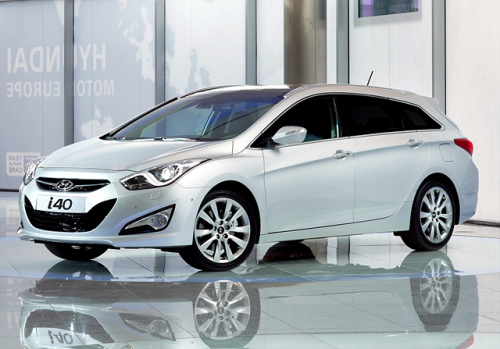
                                    Hyundai i40


Hyundai Motor

Hyundai Motor launched its first Avante Touring in 1995, based on the body of popular Avante sedan. The first ambitious trial to sell an estate car here turned out to be a failure due to its awkward design.

But the automaker has launched the all-new i40 wagon here after its success in Europe. The i40 is available in two forms ― saloon and estate.

Designed and engineered at the company's European R&D headquarters in Germany, the i40 has moved Hyundai towards a “modern premium” positioning on the continent, providing consumers with high-end features and vehicle quality at accessible prices.

It represents an evolution of Hyundai's unique “fluidic sculpture” form, creating a sleek, elegant wagon with uncompromised comfort and load capacity.

Its cargo capacity ranges from 553 liters to 1,719 liters with the rear seats folded down.

The all-new Hyundai i40 comes with either a 1.7-liter diesel or 2.0-liter gasoline engine.

The biggest advantage of the i40 wagon is affordability. Its prices range from 26 million won to 32 million won.


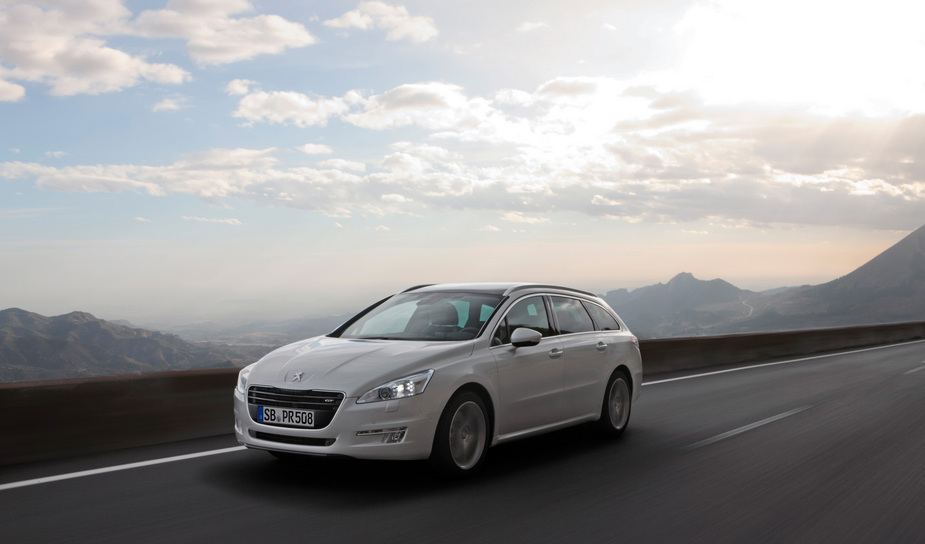
                                     Peugeot 508 SW Allure

Peugeot

Peugeot is best known for its high fuel efficiency here, and the French automaker’s estate models are no exception.

With the success of Peugeot 308 sedan, the firm has launched the five-door hatchback, the SW estate and the CC coupe convertible.

The Peugeot 308 SW e-Hdi’s fuel economy is very impressive at 18.1 km/l. The cargo capacity can be expanded to 2,149 liter from 674 liters depending on rear seat arrangements. It is priced at 33.9 million won.

The Peugeot 508 SW Allure is an impressive all-rounder. It may not be quite as sharp to drive as the saloon version, but comfort and luxury are top-notch and it certainly feels built to last.

Its 2.0-liter Hdi engine can generate 163 horsepower with a fuel efficiency of 14.8 km/l.

It is priced at 48.9 million won.

Tuesday, 11 June 2013


Carmakers adopt innovative marketing

Based on article from Korea Times May. 20, 2013

Chrysler offers off-road experience in downtown Seoul


 A Jeep SUV drives on a steep slope in a track built to offer drivers off-road experiences in Gangnam, southern Seoul, Thursday, during the event titled, “Jeep Urban Experience.” / Courtesy of Chrysler Korea


Popular Jeep models such as the Wrangler and the Grand Cherokee made an appearance in Gangnam, southern Seoul during the weekend, offering people off-road experiences.

During the event, titled “Jeep Urban Experience,” people had a chance to test-drive Jeep models in various “extreme” conditions such as steep slopes and other obstacles.

For the event, Chrysler Korea built an off-road track on a 2,600-square-meter area of land. Chrysler Korea is the official importer of three brands ― Chrysler, Jeep and Fiat.

The firm said it aims to promote the strengths of its products which are famous for off-road driving.

“This is for those who want to go wild with a Jeep but can’t afford to due to their busy city life,” an official from Chrysler Korea said. “People dreaming of experiencing off-road driving can have fun from this event.”

Like Chrysler Korea, automakers are holding various interesting marketing events for customers to let them have more first-hand experiences of their vehicles, taking a step forward from conventional advertising of their unique selling points and displaying vehicles in showrooms. Market insiders say that it shows the fierce competition between companies here.


Kim Jin-pyo, left, a presenter of Top Gear Korea, hosts the launch event of the Chevrolet Spark S at Beyond Museum in Cheongdam-dong, southern Seoul, Tuesday. It was organized in the form of a television talk show.
/ Courtesy of GM Korea


Ford Korea held an art exhibition featuring the all-new Lincoln MKZ, which was launched here.

Titled “Art By MKZ,” the event was held between May 23 and 25 at Beyond Museum in Cheongdam-dong, southern Seoul.

The firm said the exhibition aimed to present the new model’s artistic features and values through about 30 artworks by eight artists in the form of painting, installation art and media art.


BMW Korea even opened the BMW 7 Series Mobility Lounge to exclusively cater to high-end customers, when it launched the 7 Series last year.

Designed by renowned architect Joon Paik, the lounge featured a lecture series on opera, a mini concert by world-renowned pianist Seo Hye-kyung, and style consulting.

Other automakers also hold a regular group camping vents to promote their recreational vehicles (RVs) and sport utility vehicles (SUVs).

For example, Hyundai Motor organized such events in Cheonan, South Chungcheong Province, on May 25 and 26 by inviting 200 families.

Ssangyong Motor holds camps for drivers of its Korando series in winter and summer, during which the automaker offers an off-road driving class to help them better use their vehicles in various road conditions.